UPI, Cards, BillPay: How India Built the World's Most Layered Payments Stack
08 / 04 / 2026
Stop asking if digital will kill cash. In 2025, India’s three core payment rails stopped competing and started specializing. Learn how UPI, Cards, and BillPay now share your wallet.

Three payment rails. One country. A 2025 story of how each found its own lane.
The old question nobody's asking anymore
A few years ago, payment conversations in India kept circling back to the same point: will UPI kill cards? Will digital kill cash? 2025 made those questions feel like the wrong ones to be asking. What actually happened is more interesting. India's three core payment methods — UPI, cards, and Bharat BillPay — stopped competing and started specializing. Each found a job it does better than the others. And somewhere in that division of labor, India quietly built one of the most layered payment ecosystems in the world.
Key Takeaway
- UPI clocked 228.5 billion transactions in 2025 — but the more interesting story is where those transactions are coming from and how small they've gotten.
- Credit cards aren't losing ground to UPI. They're changing what they're used for — and the shift is more deliberate than most people realize.
- India's three core payment rails now serve entirely different jobs — and together, they're doing something no single method could pull off alone.
UPI It's not just growing. It's going smaller
UPI's average transaction size fell again in 2025. Person-to-merchant payments — the kind you make at a kirana store or while paying for an auto ride — averaged ₹592 per transaction. That number has been falling consistently, and the direction matters more than the absolute figure. It means UPI is no longer primarily a tool for transferring money between people. It has become the default way millions of Indians complete small, everyday purchases. The shift from P2P (person-to-person) to P2M (person-to-merchant) is the real UPI story of 2025 — and the full breakdown of how that split played out, across geographies and transaction categories, is worth reading in the report.
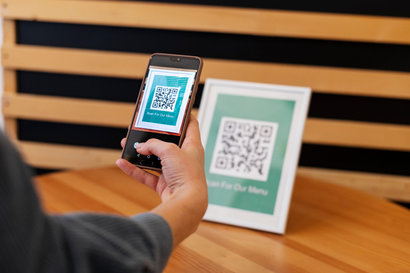
The QR code infrastructure that enabled this is also worth noting. Over 731 million UPI QR codes were active by December 2025. What that number represents in terms of merchant digitization — which kinds of merchants, where, and at what rate — is something the data covers in depth.
228.5 billion transactions in 2025. A 33% jump over the previous year. Those numbers are easy to lead with — but they tell you less than one other figure buried deeper in the data. |
Cards - A quiet repositioning
Debit card transactions fell sharply in 2025. Credit card transactions rose just as sharply. At face value, that looks like one card type replacing another. What's actually happening is more structural. UPI absorbed the routine, smaller purchases that debit cards used to handle. That freed credit cards to move into different territory — higher-value purchases, online commerce, categories where reward points and EMI options make the card a better choice than a direct bank transfer.
Credit card transaction volume crossed 5.69 billion in 2025, up 27%. But the more revealing metric is where those transactions are happening and what the average ticket sizes look like across PoS versus online. The split tells a story about how consumer spending intent differs across channels — and it is covered in the report across several pages of data.
The POS terminal itself is changing character. It was once the standard checkout for most card transactions. In 2025, it is becoming something closer to a premium lane.
Bharat BillPay - The rail that runs in the background
Most people do not think about Bharat BillPay the way they think about UPI or their credit card. That is precisely why its 2025 numbers are worth pausing on. Transaction value on the platform nearly doubled year-on-year. The categories driving that growth have expanded well beyond electricity and DTH bills — into education fees, loan repayments, and subscriptions.
These are predictable, recurring expenses that most households were handling manually or through cash before. The platform's transaction volume and value growth rates in 2025 — and the specific category-level breakdown of what drove them — are detailed in the report. What they collectively point to is a behavioral shift: more of India's must-pay monthly expenses are moving to automated digital flows.
Three rails, one wallet
The clearest way to see how the three rails fit together is through a single household. Someone might tap their phone to pay a street vendor, use a credit card for an online order, and have their utility bills and loan EMI auto-debited through Bharat BillPay — all in the same month, without ever consciously choosing between payment methods. That seamlessness is not accidental. It reflects years of infrastructure investment, regulatory support, and a merchant acceptance ecosystem that expanded substantially in 2025.
How those acceptance numbers break down — across QR codes, PoS terminals, and Bharat QR — is one of the more granular sections of the report and worth looking at if you work in this space. The 2025 data marks a point where India's payments stack stopped being three separate systems and started functioning as one layered whole.
Download - India Digital Payment Report Calendar Year 2025 in Review