
The future of payments won’t be won by a single rail
04 / 11 / 2026
At our second Oslo event “Rebuilding Payments: Innovation, Sovereignty and Trust in the New Era”, discussions pointed to the next challenge for Norway and Europe: making choice, trust and resilience work across an increasingly complex payments ecosystem.

Norway is one of Europe’s most digitally mature payment markets. Yet digital maturity is not an endpoint. At the gathering in Oslo, senior representatives from across the financial sector explored what comes next: how can payments continue to innovate, bringing better user experience and choice, whilst the increasingly complex and interoperable underlying infrastructures remain secure and resilient?
The scale of Norway’s digital payment habits is striking: the average Norwegian makes 572 card payments a year, among the highest rates globally. And a recent survey found that just 3% of respondents had used cash for their most recent purchase. Yet payment revenues in Norway are still growing by more than 10%, well above the European average. Despite this, or perhaps because of this, Norway is faced with managing multiple payment rails, all vying for a place.
At Worldline, we believe the outcome is unlikely to be a single winning payment rail. Consumers expect choice, merchants need efficient payment acceptance and reconciliation, and financial institutions need reliability and control. Norway’s domestic card scheme BankAxept and mobile payment service Vipps sit alongside international card schemes, wallets and instant payments. The challenge is making these solutions work across more use cases and connecting them to the wider ecosystem. Without that coordination, greater choice risks creating greater complexity.
That challenge is already visible in the card market: BankAxept continues to lose share to international schemes. Its relatively late support for remote transactions (introduced in 2024) may be one factor, though not necessarily the whole story.
Beyond digital maturityNorway’s experience highlights an opportunity for the wider European market. Domestic payment solutions must continue to evolve as commerce changes, while instant payments have potential to expand beyond person-to-person transfers.
Vipps is helping drive the growth of instant payments in Norway. They now account for around 25% of credit transfers, but remain below their 2022 peak, with growth of less than 3%. The contrast with Spain is notable: there, instant payments account for more than half of credit transfers and are still growing by over 30%. These figures suggest that there may be further potential for instant payments, and for Vipps, in Norway.
An example of a small, but meaningful improvement is Request to Pay. It is not intended to replace the digital payments Norwegians already make so frequently. Its opportunity is in a smaller but valuable part of people’s financial lives: variable bills, exceptional charges and invoices where customers want to review the amount, choose when to pay and approve the transaction themselves. If even some of these more complex payments could become simpler, more transparent and immediate, Request to Pay could add meaningful value.
Thus, as multiple payment rails co-exist orchestration becomes a strategic priority. By coordinating payment methods, providers and services, orchestration helps financial institutions and merchants manage complexity, connect new capabilities to existing infrastructure and maintain a consistent customer experience. For merchants, bringing payment methods and reconciliation into a more unified operational view can also reduce friction and complexity.
Sovereignty, trust and resilience go hand in handOne of the central themes in Oslo was that payment sovereignty does not mean isolation. It is about retaining control and choice: being able to combine domestic solutions with European infrastructure and international networks, while maintaining alternatives when a payment route becomes unavailable.
This flexibility is increasingly important as financial institutions navigate a changing competitive landscape. Emerging technologies and business models are challenging established boundaries, while operational resilience remains essential to maintaining trust. Orchestration can help turn choice into practical resilience by enabling different payment capabilities to work together, rather than leaving institutions dependent on isolated solutions or individual routes.
Trust must be built into the entire payment journey, rather than added as a final check. Authentication, payee verification and fraud monitoring need to work together without introducing unnecessary friction for customers. Collaboration is equally important. Fraud patterns cross institutional boundaries, making coordinated intelligence and shared capabilities valuable assets to individual banks’ defences. Trust is also reinforced by consistent user experience and as new services such as Request to Pay develop, they should connect seamlessly with these capabilities and not become isolated point solutions that add to operational fragmentation.
Preparing for what comes nextThe payments landscape will become more complex as agentic commerce, stablecoins, tokenised assets and central bank digital currencies (CBDCs) develop. These technologies raise questions about how new forms of value and autonomous transactions will interact with existing infrastructure, and what trusted ecosystems will require. While many developments are still early, financial institutions should already be preparing for their implications.
Norway offers lessons for Europe, not because every market should adopt the same national model, but because domestic innovation and broader interoperability can reinforce one another. Smaller markets can provide opportunities to test new approaches, while shared infrastructure can support new services without removing competition. Banks can collaborate on common capabilities while continuing to differentiate through their own products, pricing and customer experience.
Ultimately, Norway’s and Europe’s next advantage will come from making a diverse payments ecosystem work as one. The goal is not to build the most payment rails, but to ensure they work together to give people and businesses choice, continuity and confidence. Orchestration will be central to achieving this: the future of payments will be defined not by which rail wins, but by how effectively and intelligently the industry connects them.
Zanda Brivule-Jansone
Related articles
-

The future of payments won’t be won by a single rail
-

Scams in Germany 2026: A €12 billion wake-up call for banks
-

Settlement Finality Directive: Direct access to payment systems for non-bank PSPs
-
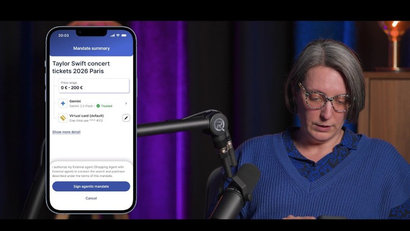
Agentic payments: the next evolution of commerce, and a new role for financial institutions
-
Simplifying European digital identity wallet adoption for banks
-

Resilience is built through practice: how the Dutch financial sector exercises for crisis situations
-

Fraud at the speed of payments: Can your organisation keep up?
-
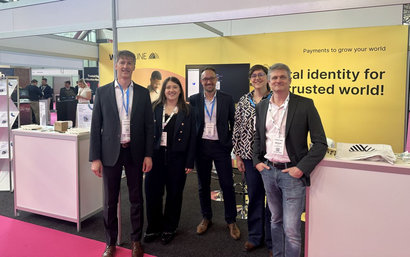
Key Takeaways from Identity Week 2026
-
Step Into the New Era of Acquiring with Worldline – Acquiring as a Service
-

Fraud Scan Day: Worldline’s yearly view on the evolving fraud landscape

