
Key Takeaways from Identity Week 2026
29 / 07 / 2026
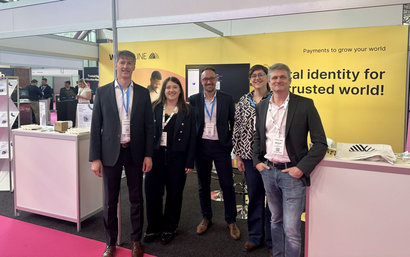
Worldline participated at Identity Week Europe 2026, held in Amsterdam, the largest European gathering dedicated to digital identity, bringing together all the actors shaping this ecosystem. Over two days of keynotes, panels and live demonstrations, discussions were focused on what is being built, what is being debated, and what is about to become reality for millions of European citizens.

For Worldline, being part of this conversation was a natural step. As a trusted European payments leader and an active contributor to the Large Scale Pilots (LSPs) preparing the future of the European Digital Identity Wallet (EUDIW), Worldline showcased its expertise on the topic through two sessions: a dedicated seminar on how banks should prepare for the EUDIW, and a panel discussion on seamless payments that showed just how tightly identity and payments are converging. Discover the key insights below.
The EUDIW is coming. Are banks ready?
The seminar opened with a snapshot of the European wallet landscape, and the picture is striking. From France Identité to ID Austria, from Italy's Documenti su IO to Germany's public and private wallet initiatives, from Spain's Cartera Digital to Sweden's BankID, every Member State is moving forward, but at its own pace, with its own architecture and its own governance model. In such a fragmented landscape, interoperability becomes the foundation on which any EUDIW strategy must be built.
Behind this complexity, four challenges quickly emerged for banks:
- Which strategy to adopt — comply with regulation only, monetise verified attributes, or issue a wallet.
- How to absorb the interoperability burden across 27+ wallets.
- How to preserve customer experience in journeys that are already highly optimised.
- How to keep the total cost of ownership under control while entering a moving ecosystem.
To help banks navigate these challenges, the seminar explored the three complementary roles they will play in the ecosystem — relying party, attribute issuer and wallet issuer — and the distinct value each role unlocks, from fraud reduction and better conversion to new monetisation streams and services. Choosing the right combination, and the right sequence, will be a defining strategic decision for the coming months.
The discussion also highlighted the wide range of banking use cases that will be impacted by the EUDIW: first account opening and online banking login, in the future, SCA for payments, SEPA mandate signature, IBAN sharing, and many more. Digital identity will progressively become a building block present in almost every banking journey, transforming not only how customers prove who they are, but also how they interact with their bank on a daily basis.
To make these concepts tangible, two live demos built on the Worldline Digital Identity Hub, our solution designed to connect banks to the entire EUDIW ecosystem through a single integration. The first showcased digital onboarding: a future customer opening a bank account in minutes by sharing certified attributes directly from their EUDIW, replacing today's process with a smooth, consent-driven experience. The second demonstrated a wallet-based online banking login, delivering secured and seamless authentication. Two concrete examples of how the EUDIW can turn regulatory obligations into real customer value, and a reminder that the technology is ready to be deployed.
Seamless Payments: where identity and payments converge
The second session was a panel discussion dedicated to seamless payments, bringing together voices from across the ecosystem to explore how digital identity will reshape the payment experience.
The starting point was a simple but pressing observation: the number of electronic transactions is exploding, and so is the number of fraud attempts. This raises the central question the panel set out to answer: how can consumer protection be strengthened without sacrificing the one-click experience customers now expect?
eIDAS 2.0 brings a first answer, with the European Digital Identity Wallet acting as an additional layer of protection, allowing consumers to store and share verifiable attestations. Behind this ambition, three levers quickly emerged:
- More inputs are needed to properly distinguish legitimate payment attempts from fraudulent ones.
- Anticipated scoring, combining these inputs with behavioural data, is essential to deliver an instant decision the moment a payment is initiated.
- Recent advances in Artificial Intelligence are helping process this growing volume of information in real time, making it a core enabler of modern fraud prevention.
The conversation then turned to what comes next. Payment means are already evolving toward agentic payments, where AI agents book rides, order food, and make purchases on behalf of consumers. This shift is pushing the industry to rethink how consent needs to cover more ground, not only between humans and their agents, but also between agents acting on each other's behalf. A new frontier for digital identity, and a preview of how deeply payments and identity will continue to converge.
A defining moment for European digital identity
Identity Week 2026 confirmed that the EUDIW is no longer a topic for tomorrow, it is a project for today. Between the seminar and the panel, one message came clearly: digital identity and payments are converging fast, and banks that start preparing now will be the ones ready when the wallet becomes part of everyday banking life. For Worldline, Identity Week Europe 2026 was another step in that journey, and there are many more to come.
This article continues the Worldline series on digital identity, following Digital Identity and how banks can prepare for eIDAS 2.0 regulation and European Digital Identity Wallet (EUDIW): From Pilots to Real-World Impact.
Discover more about the Worldline Digital Identity Hub.
Related articles
-
Scams in Germany 2026: A €12 billion wake-up call for banks
-
Simplifying European digital identity wallet adoption for banks
-

Fraud at the speed of payments: Can your organisation keep up?
-
Key Takeaways from Identity Week 2026
-

Fraud Scan Day: Worldline’s yearly view on the evolving fraud landscape
-
Checklist Before You Implement a Passwordless Authentication Solution
-
European Digital Identity Wallet (EUDIW): From Pilots to Real-World Impact
-

Phishing Resistant MFA Through FIDO Standards? Here’s All You Need to Know
-

Biometric Authentication Challenges in Fintech and Banking
-
Achieve Next Gen Duo Multi Factor Authentication with FIDO Standards


