
Phishing Resistant MFA Through FIDO Standards? Here’s All You Need to Know
22 / 06 / 2026
Phishing resistant MFA is no longer a niche topic; it’s a foundational requirement for secure, scalable financial services in today’s threat landscape. Password-based approaches continue to be exploited through credential theft, phishing, and password reuse, leaving banks and fintechs vulnerable even as regulatory expectations tighten.

The good news is that phishing resistant MFA, grounded in open standards like FIDO2/WebAuthn and SPC, can deliver strong protection without sacrificing user experience. Worldline FIDO Server sits at the heart of this shift, providing a passwordless, device-bound MFA backbone that scales across online banking, mobile apps, and partner ecosystems while meeting PSD2/SCA and governance requirements.
How Does Phishing and Account Takeover Attacks Work?
Phishing attacks frequently target privileged users—those with access to the most sensitive data and critical systems. When an initial breach occurs, attackers often attempt to escalate by compromising additional high‑privilege accounts from inside the perimeter.
Authentication methods based on public‑key cryptography have demonstrated strong resistance to these threats; examples include FIDO security keys and smart cards, enabling phishing‑resistant, passwordless authentication that strengthens defense across the enterprise.
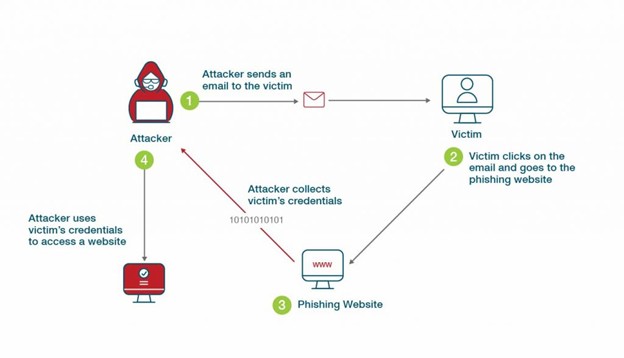
There’s no need to tell you that in the financial sector, an account takeover can have disastrous consequences for both end users and institutional officials.
Phishing attacks frequently target privileged users—those with access to the most sensitive data and critical systems. When an initial breach occurs, attackers often attempt to escalate by compromising additional high‑privilege accounts from inside the perimeter. Authentication methods based on public‑key cryptography have demonstrated strong resistance to these threats; examples include FIDO security keys and smart cards, enabling phishing‑resistant, passwordless authentication that strengthens defense across the enterprise.
The need for phishing‑resistant MFA has become increasingly important. Some experts estimate that as of 2020 spear phishing was linked to as much as 95% of all successful attacks against organizational networks in both the private and public sectors. The following year saw several high‑profile breaches, including Colonial Pipeline and SolarWinds. In response to these threats, the White House issued a cybersecurity executive order and a Zero Trust strategy in collaboration with the Office of Management and Budget (OMB), directing US federal agencies to deploy phishing‑resistant MFA by the end of 2024.
What makes phishing resistant MFA essential for finance
Phishing remains a leading attack vector for financial services. Attackers increasingly leverage sophisticated deception to harvest credentials, secret tokens, or one-time passcodes (OTPs). Traditional two-factor approaches that still rely on secrets can be undermined by phishing tactics, credential stuffing, or SIM-swapping. Phishing resistant MFA changes the game by moving critical authentication factors away from user-held secrets and toward cryptographic credentials that stay bound to trusted devices. The key benefits include:
- Reduced credential theft: public-key cryptography ensures private keys never leave the device, making remote theft far less actionable.
- Stronger resistance to phishing: passkeys and WebAuthn-based factors cannot be phished in the same ways passwords or OTPs can.
- Friction-aware security: strong protection remains, but the user experience is streamlined through biometrics, device-bound credentials, and risk-aware orchestration.
- Cross-channel consistency: a single, device-bound credential model supports login and approvals across web, mobile, and partner channels with unified governance.
From passwords to phishing resistant MFA: the core shift
Traditional MFA often pairs a password with a second factor. In practice, many implementations still hinge on passwords or password-like secrets as one of the factors, leaving a residual risk if that second factor is compromised or phishable. Phishing resistant MFA replaces that vulnerability with cryptographic credentials rooted in the user’s device, anchored by attestation and platform security. This approach enables:
- Passwordless sign-ins for a seamless user journey
- Device-bound authentication that scales across devices and ecosystems
- A governance-friendly, auditable trail suitable for audits and regulators
Worldline FIDO Server as a standards-based MFA foundation
Worldline FIDO Server provides a robust, scalable backend for phishing resistant MFA built on open standards (FIDO2/WebAuthn, SPC). It makes passwordless MFA not only possible but practical for enterprise-scale deployments. Key capabilities include:
- Open standards foundation: FIDO2/WebAuthn and SPC deliver interoperable, phishing-resistant MFA across devices and platforms.
- Passwordless paths that satisfy MFA principles: device-bound passkeys anchored to trusted devices, with verified user attributes guiding the flow.
- Flexible deployment: on-premises or cloud, with seamless integration into Worldline’s authentication and fraud portfolio (FRAMS, ACS, DSS) and scalability for enterprise needs.
- Device-bound assurance: passkeys and device attestations tie authentication to a specific, trusted device, dramatically reducing the risk of credential compromise.
- Risk-aware orchestration: policy-driven decisions adjust prompts based on device health, location, behavior, and transaction context to balance security and UX.
- Auditable governance: end-to-end traceability of authentication events supports PSD2/SCA compliance and regulatory reviews.
PSD2/SCA and the role of adaptive, phishing resistant MFA
PSD2 and SCA emphasize risk-based authentication that strengthens security where it’s needed while minimizing friction for legitimate customers. Phishing resistant MFA built on Worldline FIDO Server offers a practical framework for compliant, user-friendly authentication. In this context:
- Inline risk decisioning: authentication prompts evolve in real time based on device health, location, and behavior, determining whether a passkey touch, biometric verification, or additional evidence is required.
- Audit-friendly controls: every decision is captured with rationale, making regulatory reviews and internal audits smoother.
- Privacy-by-design: credentials stay bound to the user’s device, and governance controls manage data flow and storage in alignment with PSD2/SCA requirements.
Practical implications and a concise path forward
- Passwordless MFA as the baseline: adopt device-bound passkeys and biometric verifications to replace or supplement passwords, reducing phishing risk and credential theft.
- Embrace risk-aware orchestration: connect MFA decisions to device health, contextual signals, and transaction risk to optimize security without frustrating users.
- Maintain governance and compliance: ensure auditable decision trails and privacy-by-design principles are embedded in every authentication flow.
- Leverage a multi-product ecosystem: integrate Worldline FIDO Server with FRAMS (fraud management), ACS (access control), and DSS (digital security suite) to deliver end-to-end security, governance, and incident management.
Use-cases and guidance for phishing resistant MFA in banking and fintech:
- Secure login across channels: a device-bound passkey unlocks accounts with minimal friction, while biometrics provide a fast, secure verification moment. If risk signals rise, the system can layer in additional checks without derailing the user experience.
- Transaction authorization: sign-offs for payments and transfers can be performed with phishing resistant MFA, anchored to a trusted device, and governed by a centralized policy framework to ensure regulatory alignment and auditability.
- Partner and XS2A scenarios: open standards ensure interoperable authentication with partner portals and third-party providers, maintaining consistent security controls and governance across ecosystems.
Partnerships and standards: FIDO Alliance and interoperability
Worldline’s ongoing partnership with the FIDO Alliance reinforces a commitment to open, interoperable standards. By building on FIDO2/WebAuthn and SPC, Worldline FIDO Server remains compatible with a broad ecosystem of authenticators and devices, accelerating integration and reducing vendor lock-in. This alliance supports a future-proof MFA approach suitable for cross-channel journeys in banking, fintech, and partner ecosystems, with a strong emphasis on PSD2/SCA readiness and privacy-by-design principles.
The Worldline ITA ecosystem: governance, risk management, and ongoing innovation
Worldline FIDO Server can function as a core passwordless MFA backbone within the Worldline ITA ecosystem, integrating with FRAMS, ACS, and DSS to deliver risk-aware authentication, centralized policy enforcement, and auditable reporting. This structure ensures consistent enforcement of authentication policies across channels, supports PSD2/SCA compliance, and provides a unified data model for risk and incident management, all while maintaining a focus on user experience.
The bottom line: embracing phishing resistant MFA as a combination of security and UX
Phishing resistant MFA is not a trade-off between security and user experience; it’s a pathway to both. By grounding MFA in open standards, device-based trust, and adaptive risk-based decisioning, financial institutions can achieve robust protection without compromising the customer journey. Worldline FIDO Server offers a practical, scalable foundation for phishing resistant MFA that aligns with PSD2/SCA, supports the FIDO Alliance standard, and integrates with FRAMS, ACS, and DSS to deliver comprehensive governance and security across channels.
Next steps for those evaluating phishing resistant MFA:
- Schedule a discovery session to map your current authentication posture to a passwordless MFA architecture powered by Worldline FIDO Server.
- Pilot a phishing resistant MFA deployment in login and transaction-authorization workflows to quantify improvements in security and user experience.
- Review governance reporting and PSD2/SCA alignment to ensure you can demonstrate risk-based decisioning and regulatory readiness.

Miriam Cihodariu
Related articles
-

Scams in Germany 2026: A €12 billion wake-up call for banks
-

Simplifying European digital identity wallet adoption for banks
-

Fraud at the speed of payments: Can your organisation keep up?
-

Key Takeaways from Identity Week 2026
-

Fraud Scan Day: Worldline’s yearly view on the evolving fraud landscape
-
Checklist Before You Implement a Passwordless Authentication Solution
-
European Digital Identity Wallet (EUDIW): From Pilots to Real-World Impact
-

Phishing Resistant MFA Through FIDO Standards? Here’s All You Need to Know
-

Biometric Authentication Challenges in Fintech and Banking
-

Achieve Next Gen Duo Multi Factor Authentication with FIDO Standards


