
Checklist Before You Implement a Passwordless Authentication Solution
03 / 07 / 2026
Passwordless authentication solutions are no longer a futuristic dream; they’re the logical next step for secure, customer-friendly banking and fintech experiences. A thoughtfully designed rollout can dramatically reduce phishing risk, streamline user journeys, and strengthen regulatory compliance.

In this article, we will give you some practical, scorable guidance with a bit more context about passwordless authentication solution standards, drawing from our extensive experience with Worldline FIDO Server at the center of our customers’ passwordless journey.
We’ll highlight how passkeys function as the practical keystone of passwordless MFA, and furthermore show how our complementary solutions FRAMS, ACS, and DSS integrate to deliver end-to-end protection. As you move forward, PSD2/SCA alignment and privacy-by-design principles guide every decision.
What a passwordless authentication solution is—and why it matters
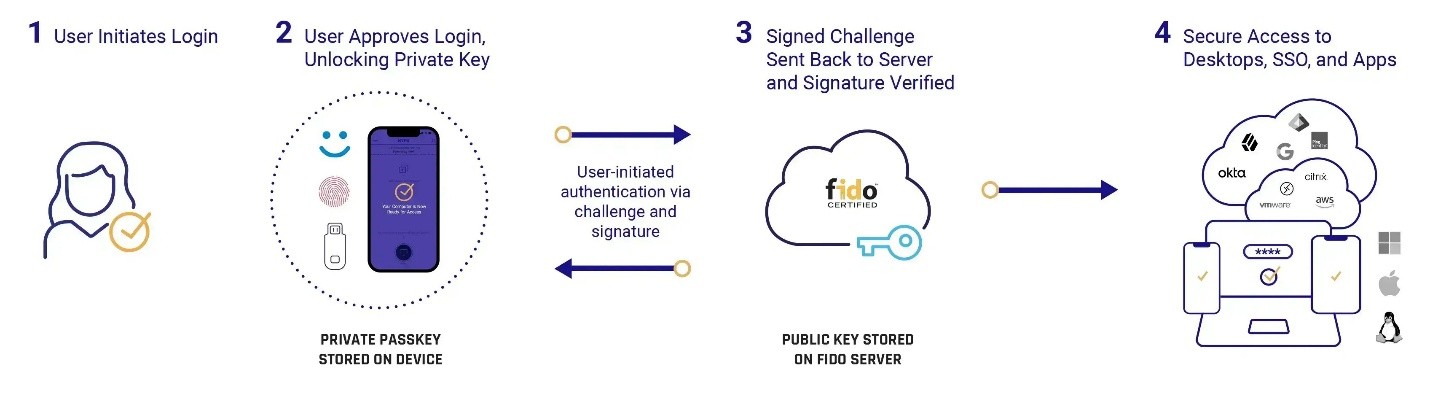
- Passkeys are FIDO cryptographic credentials bound to a user’s device, enabling sign-ins that mirror the ease of unlocking a device, with biometrics or other device-based factors used for verification.
- This approach replaces or dramatically reduces the reliance on usernames and passwords, delivering phishing resistance and a smoother user experience across web, mobile, and partner channels.
- A passwordless authentication solution combines device-bound trust, open standards (FIDO2/WebAuthn, SPC), and risk-aware orchestration to enable secure, scalable access management.
- In financial services, this means tighter security without sacrificing user satisfaction, improved governance and auditability, and easier PSD2/SCA compliance through a standardized, auditable decisioning trail.
What passkeys bring to a financial services context
- Phishing resistance: the private keys never leave the device, and there is no reusable password to steal, reducing credential theft.
- Consistent UX across channels: sign-ins and approvals across online banking, mobile apps, and partner portals feel uniform and frictionless.
- Strong governance with privacy-by-design: credentials stay bound to devices, and policy-driven controls govern data flow and storage, simplifying audits and regulatory reporting.
- Enterprise readiness: scalable deployment options (on‑premises or cloud) and seamless integration with a portfolio of fraud and security products to address end-to-end needs.
Worldline FIDO Server as the standards-based MFA foundation
- The core passwordless MFA engine, built on open standards (FIDO2/WebAuthn and SPC), anchoring authentication to trusted devices and verified user attributes.
- Flexible deployment: on‑premises or cloud, with straightforward integration into Worldline’s authentication and fraud portfolio (FRAMS, ACS, and DSS) to cover the entire security and governance stack.
- Device-bound assurances: passkeys and device attestations create a strong, hardware-backed foundation that reduces the risk of credential compromise.
- Risk-aware orchestration: policy-driven decisions tailor MFA requirements based on device health, location, user behavior, and transaction context, balancing security with user experience.
- End-to-end governance: comprehensive auditing and reporting support PSD2/SCA compliance and regulatory reviews.
A balanced approach to PSD2/SCA and adaptive MFA PSD2/SCA calls for risk-based authentication that strengthens security where needed while preserving a smooth customer experience.
A passwordless MFA stack centered on Worldline FIDO Server enables adaptive decisioning where context—device health, location, behavior, and transaction risk—drives whether a passkey touch, biometric verification, or additional verification is required. The governance layer captures every decision, delivering auditable trails for regulators and internal risk teams while protecting user privacy.
A practical architecture and integration view
Worldline FIDO Server is most effective when thought of as the backbone in a broader architecture.
- FRAMS supplies real-time risk context and fraud signals to inform decisioning.
- ACS enforces session controls and policy-driven prompts across browsers, mobile apps, and partner interfaces.
- DSS protects the secure channels, enforces governance, and ensures policy compliance across authentication events.
The resulting architecture unifies device health, location, behavior, and transaction context within a single data model, enabling consistent risk-based prompts while keeping the user journey smooth.
A governance-focused path to enterprise readiness
Implementing passwordless authentication is as much about governance and process as about technology. Begin with clear objectives, measurable outcomes, and a plan that aligns with existing IAM ecosystems. Define success metrics—such as reductions in password resets, improved login times, and stronger auditability for PSD2/SCA—and map policies to a risk framework that embraces privacy-by-design. The governance layer should provide auditable decision trails for every authentication event, supporting both regulatory reviews and internal risk management.
Balancing user experience with robust security
The standout benefit of passwordless MFA is the ability to deliver strong security without compromising UX. Passkeys enable sign-ins and approvals that feel fast and natural, while risk-aware prompts ensure security is applied only when needed. The key is to design prompts and workflows that feel proportionate to risk, maintain cross-channel consistency, and clearly communicate security benefits to users. A governance-first approach helps maintain an auditable, privacy-conscious trail that regulators and auditors can follow.
Pilot design and rollout: turning vision into action
A practical passwordless implementation unfolds in stages. Start with a carefully scoped pilot focused on two core flows: login and transaction authorization. Establish concrete success criteria such as reductions in password-related support, faster sign-in times, and a cadence of governance reporting aligned with PSD2/SCA.
Leverage our FRAMS to surface risk signals that inform decisioning, while ACS enforces session controls and DSS ensures secure channels and governance. Gather feedback from risk managers, security engineers, IT decision-makers, and fraud leaders to refine prompts, enrollment processes, and device coverage. The aim is to demonstrate tangible improvements in security and user experience and then expand to broader channels.
A migration mindset: passkeys as the core, with a scalable rollout
Passkeys serve as the intellectual anchor of passwordless MFA, but a successful rollout requires a broader strategy. Instead of replacing every credential at once, plan a staged expansion of device-bound authentication, refine risk-based decisioning, and strengthen governance. Consider device enrollment, user education, accessibility, and ongoing device attestations to counter evolving spoofing techniques. By combining passkeys with device-bound trust and policy-driven risk decisions, enterprises can deliver robust MFA protections without sacrificing customer convenience.
Wrapping up: a practical, scalable path to passwordless MFA
A passwordless authentication solution represents a strategic transformation that enhances security, governance, and user experience. Worldline FIDO Server provides a dependable backbone for passwordless MFA, weaving together passkeys, device attestations, and risk-aware orchestration with a proven portfolio of fraud and governance tools (FRAMS, ACS, DSS). This integrated approach supports PSD2/SCA compliance, reduces friction in user journeys, and offers a future-proof path to enterprise-grade authentication.
If you’re ready to move forward, we can tailor a pilot that demonstrates login and transaction-authorization flows, quantify friction reductions, and lay out governance and auditing requirements. We can also schedule together a discovery session to align objectives, refine success metrics, and shape a practical rollout plan.

Miriam Cihodariu
Related articles
-

Simplifying European digital identity wallet adoption for banks
-

Fraud at the speed of payments: Can your organisation keep up?
-

Key Takeaways from Identity Week 2026
-

Fraud Scan Day: Worldline’s yearly view on the evolving fraud landscape
-

Checklist Before You Implement a Passwordless Authentication Solution
-
European Digital Identity Wallet (EUDIW): From Pilots to Real-World Impact
-

Phishing Resistant MFA Through FIDO Standards? Here’s All You Need to Know
-

Biometric Authentication Challenges in Fintech and Banking
-

Achieve Next Gen Duo Multi Factor Authentication with FIDO Standards
-
Passwordless Authentication in Financial Verticals: All You Need to Know


