
Biometric Authentication Challenges in Fintech and Banking
17 / 06 / 2026
Biometric authentication has become a cornerstone of modern security architectures in finance. It offers the promise of strong protection with a convenient user experience, turning login and authorizations into quick, seamless actions. Yet as a stand-alone solution, biometrics presents notable limitations.

In fintech and banking, where regulatory scrutiny and high-stakes transactions are the norm, it’s important to recognize where biometric authentication falls short and how a broader, passwordless MFA approach can fill those gaps. Worldline FIDO Server provides a path that preserves the benefits of biometrics while augmenting them with additional factors and risk-aware controls for true multi-factor authentication.
Why biometric authentication remains compelling—and why it isn’t enough on its own
Biometric authentication leverages unique physiological traits—fingerprints, facial features, iris patterns, voice, or behavioral signals—to verify a user’s identity. The appeal is evident: quick sign-ins, reduced password fatigue, and a natural alignment with consumer behavior. However, relying on biometrics as the sole control introduces several challenges:
- Security vulnerabilities in isolation:
- Spoofing and presentation attacks: attackers have developed increasingly sophisticated means to spoof biometric sensors, including high-quality masks, imitations, and deepfake likenesses for some modalities.
- Template theft risk: biometric templates are not something users can reset like passwords. If biometric data is stolen from a device or a server, the consequences can be long-lasting and difficult to remediate.
- Sensor quality gaps: biometric effectiveness varies across devices and platforms. A mismatch in camera resolution, sensor integrity, or software pipelines can degrade security.
- Privacy and regulatory considerations:
- Sensitive data handling: biometric data is highly sensitive. Regulations governing collection, storage, processing, and consent (GDPR, regional privacy laws) impose strict requirements and heavy scrutiny.
- Data minimization and control: even with on-device templates, governance and data flow must be carefully designed to minimize exposure and enable traceability for audits.
- Usability and accessibility limitations:
- False rejections and accessibility barriers: injuries, worn sensors, lighting conditions, or device limitations can lead to legitimate users being blocked or frustrated.
- Inclusivity challenges: biometric performance can vary across demographics, potentially impacting equal access to secure channels unless mitigated with well-designed fallbacks.
- Device and ecosystem fragmentation:
- Platform variance: not all devices offer the same biometric capabilities, creating inconsistent protection levels across web, iOS, Android, and partner channels.
- Lifecycle maintenance: biometric systems must be updated to counter evolving spoofing techniques, requiring ongoing software and policy updates.
- Recovery, portability, and resilience:
- What if you cannot use biometrics for a session (temporary injury, device loss, or degraded sensor)? Without a robust fallback, user access can be stranded or require lengthy recovery flows.
From biometric authentication alone to a practical, enterprise-grade MFA
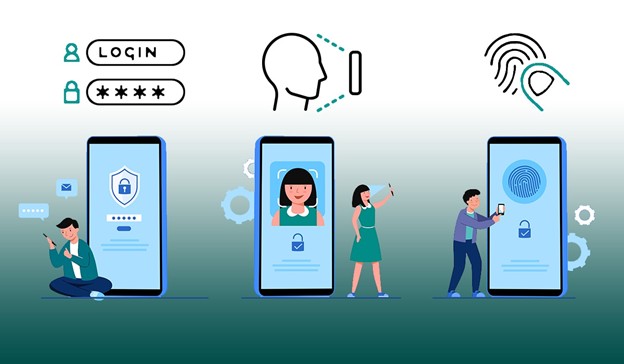
The realities above underline a simple truth: biometrics are powerful, but they are most effective when embedded in a layered MFA strategy. A passwordless, standards-based approach that combines biometrics with a second factor anchored to the device, risk-based orchestration, and strong governance delivers true multi-factor authentication. This is where Worldline FIDO Server shines.
Worldline FIDO Server: a comprehensive, standards-based MFA backbone
Worldline FIDO Server provides a robust foundation for passwordless authentication that intentionally enhances biometrics with additional factors and intelligent controls. Key elements include:
- A two-factor, passwordless model:
- One factor: a device-bound credential (passkey rooted in WebAuthn) that ties authentication to a trusted device.
- Second factor: a biometric verification or an equivalent device-based attestation that confirms user presence. The result is a genuine two-factor, passwordless experience that strengthens security without reverting to passwords.
- Open standards interoperability:
- Built on FIDO2/WebAuthn and SPC, ensuring broad device and platform support, reduced integration risk, and future-proof interoperability across channels.
- Flexible deployment and integration:
- On-premises or cloud deployment, with seamless integration into Worldline’s authentication and fraud portfolio (FRAMS, ACS, DSS) to deliver end-to-end security and governance.
- Device-bound assurance and attestation:
- Passkeys and device attestations anchor authentication to a known, trusted device, enabling policy-driven risk decisions without compromising user convenience.
- Risk-aware orchestration:
- Dynamic, context-driven prompts based on device health, location, user behavior, and transaction context. This enables strong protection when needed and frictionless experiences when the risk is low.
- Auditable governance:
- Every authentication event leaves an auditable trail, supporting PSD2/SCA compliance, regulatory reviews, and enterprise governance requirements.
- Alignment with PSD2/SCA and privacy-by-design:
- Passwordless MFA that adheres to regulatory expectations while keeping credentials bound to user devices and tightly governed in terms of data handling.
How biometric authentication fits into a broader MFA strategy:
- Elevating security with a second factor: pair biometrics with a device-bound passkey to satisfy multi-factor requirements without resorting to passwords.
- Maintaining usability at scale: biometrics can remain the primary verification moment, while the second factor and risk-driven prompts handle higher-risk scenarios or sensitive actions.
- Enabling cross-channel consistency: a single, device-bound credential model supports login and approvals across web, mobile, and partner interfaces with uniform governance.
- Supporting privacy and compliance: with privacy-by-design principles and auditable decisioning, biometrics are used in a way that respects regulations and enterprise controls.
PSD2/SCA and adaptive MFA in a biometric-centric world
Biometric authentication benefits from adaptive MFA because risk signals can determine when to require an additional factor or stronger verification. Implementing adaptive MFA with Worldline FIDO Server allows for:
- Inline risk decisioning: use device health, location, behavior, and transaction context to decide when to apply additional verification beyond biometrics.
- Audit-friendly decisioning: maintain a clear rationale for every prompt, aiding regulator reviews and internal audits.
- Privacy-by-design governance: ensure biometrics stay bound to the device, with policy-driven controls guiding data flows and storage.
Practical takeaways regarding biometric authentication for financial institutions:
- View biometrics as a powerful enabler, not a standalone solution. Use it as part of a broader, passwordless MFA framework.
- Prioritize device-bound credentials and risk-aware orchestration to reduce exposure to spoofing and credential theft.
- Invest in governance and auditability to meet PSD2/SCA requirements and regulatory expectations.
- Plan for inclusivity, accessibility, and fallback options so the experience remains smooth for all customers.
A path forward with Worldline FIDO Server
If you’re aiming to strengthen your biometric authentication program while ensuring robust, enterprise-grade MFA, consider adopting Worldline FIDO Server as the central backbone. By combining biometrics with device-bound passkeys, risk-based decisioning, and a governance-first approach, you can deliver secure, frictionless sign-ins and transaction approvals across channels—without compromising privacy or regulatory alignment. It’s a practical, scalable path to true MFA that keeps the customer experience at the forefront.
Next steps for you:
- Explore a pilot that demonstrates passwordless MFA combining biometrics with device-bound credentials in login and transaction workflows.
- Review governance reporting and PSD2/SCA alignment to ensure you can demonstrate compliance and risk-based governance.
- Schedule a discovery session to map your current biometric authentication posture to a comprehensive, passwordless MFA architecture powered by Worldline FIDO Server.

Miriam Cihodariu
Related articles
-

Scams in Germany 2026: A €12 billion wake-up call for banks
-

Simplifying European digital identity wallet adoption for banks
-

Fraud at the speed of payments: Can your organisation keep up?
-
Key Takeaways from Identity Week 2026
-

Fraud Scan Day: Worldline’s yearly view on the evolving fraud landscape
-
Checklist Before You Implement a Passwordless Authentication Solution
-
European Digital Identity Wallet (EUDIW): From Pilots to Real-World Impact
-

Phishing Resistant MFA Through FIDO Standards? Here’s All You Need to Know
-

Biometric Authentication Challenges in Fintech and Banking
-

Achieve Next Gen Duo Multi Factor Authentication with FIDO Standards


