
Achieve Next Gen Duo Multi Factor Authentication with FIDO Standards
16 / 06 / 2026
Duo multi factor authentication has become a widely discussed concept in the security landscape, especially as organizations look to balance strong protection with a smooth user experience. Some solution vendors promote a two-factor approach by pairing a password with a second factor, sometimes labeled as “dual” or “duo” MFA.

While this can raise security if you’re improving it from a very low bar, it often still relies on a password or a password-like secret as one of the factors. The best path forward for financial institutions is to move beyond password-dependent dual-factor models and deploy passwordless, standards-based MFA that delivers robust protection and a superior UX. Worldline FIDO Server provides that foundation—an open-standards, device-bound MFA backbone that can function as a standalone protection layer or as part of Worldline’s broader authentication and fraud portfolio.
Why the term duo multi factor authentication matters in context
The idea of duo MFA reflects a two-factor approach: something the user has and something the user is or knows. In practice, many implementations still hinge on passwords as one of the two factors. This creates a corollary risk: passwords remain a significant attack surface, subject to phishing, leakage, and credential stuffing.
What sets passwordless MFA apart is the substitution of a password with cryptographic credentials rooted in the user’s device. By replacing the “something you know” with a cryptographic key protected by the device, financial institutions can achieve two distinct advantages: higher security resilience and a more harmonious customer experience.
Worldline FIDO Server: a standards-based, passwordless path to strong MFA
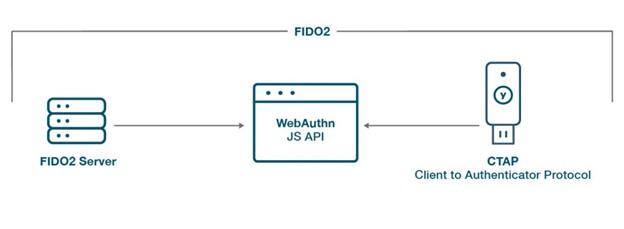
Worldline FIDO Server is designed to serve as the core MFA engine that aligns with open standards (FIDO2/WebAuthn and SPC). It demonstrates that you can achieve two factors that are both strong and user-friendly without depending on passwords. Key attributes include:
- Passwordless MFA that remains true to the two-factor discipline: one factor is the device-bound credential (passkey rooted in WebAuthn), and the second factor can be a biometric verification or a second device-based attestation. The result is a true passwordless “two-factor” experience.
- Open standards interoperability: FIDO2/WebAuthn and SPC ensure broad device and platform support, reducing integration risk and vendor lock-in.
- Flexible deployment: on-premises or cloud, with seamless integration into Worldline’s authentication and fraud portfolio, including FRAMS, ACS, and DSS.
- Device-bound assurance: passkeys and device attestations tie authentication to a trusted device, shifting the security posture from secrets to hardware-backed credentials.
- Risk-aware orchestration: adaptive decisioning uses device health, location, behavior, and transaction context to tailor MFA prompts and flows.
- Auditable governance: end-to-end traceability supports PSD2/SCA compliance, regulatory reviews, and internal risk governance.
Why passwordless MFA is a better path than password-reliant dual-factor models
- Reduced phishing risk: cryptographic keys cannot be phished in the same way as passwords, so credential theft becomes far less effective.
- Superior user experience: biometric and device-bound sign-ins can be fast and frictionless, improving onboarding, login, and approvals for transactions.
- Consistency across channels: a single credential model supports web, mobile, and partner interfaces with identical governance and decisioning.
- Strong governance with privacy by design: decisions are auditable, data handling follows policy governance, and credentials remain tied to the user’s device.
PSD2/SCA and adaptive MFA in a passwordless world
PSD2 and SCA demand risk-based authentication that strengthens security where needed while minimizing friction for legitimate customers. A passwordless MFA stack centered on Worldline FIDO Server can adapt in real time:
- Inline risk decisioning: at login or during transactions, determine whether a passkey touch, biometric verification, or additional evidence is required.
- Audit-friendly controls: every decision is documented with rationale, simplifying regulatory reviews and internal audits.
- Privacy-by-design: credentials stay bound to the device, with governance controls regulating data flow and storage.
Use cases illustrating duo multi factor authentication in finance with an emphasis on a richer UX:
Use Case 1: Secure login to online banking and mobile apps
A modern login strategy uses a device-bound passkey complemented by biometric verification. During sign-in, Worldline FIDO Server evaluates device health signals (device ID, OS integrity, geolocation, tamper indicators) and applies risk signals to decide whether to authorize with a passkey or prompt for additional verification. The outcome is a frictionless sign-in that remains phishing-resistant and PSD2/SCA-aligned, providing a consistent experience across web and mobile ecosystems.
Use Case 2: MFA for transaction authorization
For payments and transfers, passwordless MFA confirms identity and intent without forcing password prompts. A device-bound credential (passkey) authorizes the transaction after risk assessment confirms an acceptable profile. End-to-end encryption and device attestation protect the transaction data, and the open-standard foundation ensures compatibility across devices and environments. The result is a smooth, auditable workflow that satisfies PSD2/SCA requirements.
Use Case 3: High-risk operations and privileged access
Critical actions, such as privileged access or back-office operations, demand an elevated MFA posture. A passwordless, device-bound approach can require stronger combinations of biometrics and device attestations for sensitive actions. Worldline FIDO Server can integrate with the broader security stack to enforce stringent session controls and real-time risk scoring, ensuring access is granted only under tightly governed conditions.
Use Case 4: XS2A and third-party collaborations
When banks enable access for third-party providers (XS2A), MFA must work consistently across ecosystems. A standardized passwordless MFA framework backed by Worldline FIDO Server ensures consistent authentication behavior across partner portals, mobile apps, and web interfaces. Open standards support interoperability with partner devices and services, while governance and auditable decisioning help meet regulatory expectations for multi-party access.
Synergies with FRAMS, ACS, and DSS in a unified MFA strategy:
- FRAMS (Fraud Management System) enriches MFA with real-time risk signals and advanced scoring, enabling more precise gating decisions and faster investigations.
- ACS (Access Control Server) enforces session-level controls and policy-driven prompts based on risk signals and channel context.
- DSS (Digital Security Suite) protects the broader security envelope, ensuring secure channels, policy enforcement, and governance across authentication events.
Partnerships and standards: the value of the FIDO Alliance Worldline’s ongoing partnership with the FIDO Alliance reinforces our commitment to open, interoperable standards. By leveraging FIDO2/WebAuthn and SPC, Worldline FIDO Server remains compatible with a wide range of authenticators and devices, reducing integration friction and accelerating regulatory readiness. This alliance underpins a future-proof approach to MFA that minimizes vendor lock-in and supports multi-channel journeys across banking, fintech, and partner ecosystems.
The Worldline governance framework: governance, risk management, and ongoing improvement Worldline FIDO Server can function as the core passwordless MFA backbone within the Worldline ITA ecosystem, integrating with FRAMS, ACS, and DSS to deliver risk-aware authentication, centralized policy enforcement, and auditable reporting. This structure supports PSD2/SCA compliance, enterprise risk management, and incident response, while maintaining a focus on user experience and privacy-by-design principles.
Closing reflections: balancing security and UX through passwordless MFA This approach shows that you don’t have to choose between security and customer experience. By embracing passwordless MFA anchored in open standards and device-based trust, financial institutions can achieve the dual goals of rigorous protection and a delightful user journey. Worldline FIDO Server provides a flexible, proven foundation for passwordless MFA that aligns with PSD2/SCA, supports the FIDO Alliance standard, and integrates with FRAMS, ACS, and DSS to deliver end-to-end governance and security across channels.
If you’re exploring how a passwordless, two-factor MFA architecture can outperform password-based dual-factor solutions like the industry’s “duo multi factor authentication” approach, we can map your current authentication flows and conduct a pilot demonstrating passwordless MFA in login and transaction-authorization scenarios. A tailored demonstration and governance reporting review can be arranged to fit your schedule.

Miriam Cihodariu
Related articles
-

Scams in Germany 2026: A €12 billion wake-up call for banks
-

Simplifying European digital identity wallet adoption for banks
-

Fraud at the speed of payments: Can your organisation keep up?
-
Key Takeaways from Identity Week 2026
-

Fraud Scan Day: Worldline’s yearly view on the evolving fraud landscape
-
Checklist Before You Implement a Passwordless Authentication Solution
-
European Digital Identity Wallet (EUDIW): From Pilots to Real-World Impact
-

Phishing Resistant MFA Through FIDO Standards? Here’s All You Need to Know
-

Biometric Authentication Challenges in Fintech and Banking
-

Achieve Next Gen Duo Multi Factor Authentication with FIDO Standards


