
Crucial Standards for Multi Factor Authentication in the Financial Sector
05 / 03 / 2026
Multi factor authentication (MFA) has become a baseline requirement for security in financial services, not a nice-to-have feature. As attackers grow more sophisticated and regulatory expectations tighten, banks and fintechs must implement MFA that is not only strong but also user-friendly, auditable, and future-ready.

This introductory blog post outlines the standards that matter today, how they translate into practical, scalable deployments, and how Worldline FIDO Server anchors a robust, end-to-end MFA strategy across online and mobile channels, with clear alignment to PSD2/SCA, the FIDO Alliance, and the broader Worldline authentication and fraud portfolio.
What multi factor authentication means for finance today:
At its core, multi factor authentication requires more than one independent credential to prove a user’s identity. In financial services, MFA typically combines:
- Something the user has (a device-bound credential, such as a passkey rooted in WebAuthn) or a secure hardware token.
- Something the user is (biometrics like fingerprint or facial recognition).
- Something the user knows (a password as a fallback or secondary factor, though many modern MFA strategies minimize or eliminate passwords altogether).
The most effective MFA implementations in finance emphasize phishing resistance, resistance to credential theft, and a friction profile that supports customer experience. In practice, this means moving away from static, reusable secrets toward device-based, user-verified credentials that remain bound to the user’s device and governed by policy-driven risk decisions. When designed thoughtfully, MFA becomes a friction-reducing feature—delivering faster sign-ins and secure approvals without lowering protection.
Worldline FIDO Server as a standards-based MFA backbone
Worldline FIDO Server provides a robust, scalable backend for multi factor authentication that is built on open standards (FIDO2/WebAuthn, SPC). It supports passwordless paths that still satisfy MFA concepts, anchoring authentication to trusted devices and verified user attributes. Key capabilities include:
- Open standards foundation: FIDO2/WebAuthn and SPC enable interoperable, phishing-resistant MFA across devices and platforms.
- Flexible deployment: on-premises or cloud deployment, seamless integration with Worldline’s authentication and fraud portfolio, and scalability to enterprise needs.
- Device-bound assurance: passkeys and device attestations tie authentication to a specific, trusted device, reducing the risk of credential compromise.
- Risk-aware orchestration: governance-driven decisioning uses device health, location, user behavior, and transaction context to tailor the MFA experience.
- Auditable governance: end-to-end traceability of authentication events supports PSD2/SCA compliance and regulatory reviews.
PSD2/SCA and the role of adaptive MFA PSD2 and the SCA requirements in Europe push for risk-based authentication decisions that balance security with user experience. The core idea is to require strong authentication for high-risk scenarios while allowing frictionless flows when risk signals are low. An MFA stack built around Worldline FIDO Server can adapt to context:
- Inline decisioning: risk signals at login or during a transaction determine whether to require a passkey touch, biometric verification, or additional evidence.
- Audit-friendly controls: every decision point is traceable, ensuring regulators can verify why and when a challenge was issued.
- Privacy-by-design: credentials stay bound to the device, with policy-driven governance controlling data flow and storage.
From a practical standpoint, this means MFA deployments that support PSD2/SCA are not rigid checklists but dynamic, risk-driven workflows that preserve user trust while meeting compliance obligations.
Use cases illustrating strong MFA in the financial sector:
Use Case 1: Secure login to online banking and mobile apps
A modern MFA login relies on a device-bound passkey combined with a biometric verification step. When a user attempts sign-in, the Worldline FIDO Server evaluates device health signals (including device ID, OS integrity, geolocation, and tamper indicators) and applies risk signals to decide whether to authorize the session with a passkey or prompt for additional verification. This approach minimizes password exposure, reduces phishing risk, and delivers a consistent experience across web, iOS, and Android apps. PSD2/SCA-aligned governance remains visible in the decisioning trail, supporting audits and regulatory reporting.
Use Case 2: MFA for transaction authorization
For payments and transfers, multi factor authentication should confirm both identity and intent. With Worldline FIDO Server, a device-bound credential (passkey) can authorize a transaction after risk assessment indicates an acceptable profile. The flow leverages end-to-end encryption, device attestation, and a secure channel to ensure the transaction data remains protected. Because the framework is built on WebAuthn/WebAuthn2 and SPC, it works across devices and ecosystems, delivering a consistent, auditable workflow that aligns with PSD2/SCA requirements.
Use Case 3: High-risk operations and administrator access
Administrative access to back-office systems or critical controls must have an elevated MFA posture. A passwordless, device-bound MFA approach can require a stronger combination of biometrics and device attestation for privileged actions. The Worldline FIDO Server can integrate with the broader security stack to enforce stringent session controls and real-time risk scoring, ensuring administrators access sensitive resources only under tightly governed conditions.
Use Case 4: Third-party access and XS2A scenarios
When banks grant access to third-party providers (XS2A), MFA becomes a shared responsibility across ecosystems. A standardized MFA framework backed by Worldline FIDO Server ensures consistent authentication behavior across partner portals, mobile apps, and web interfaces. Open standards support interoperability with partner devices and services, while governance and auditable decisioning help satisfy regulatory expectations for multi-party access.
Synergies with FRAMS, ACS, and DSS in a unified MFA Fraud-Combating Strategy
- FRAMS (our Fraud Management System) enriches MFA with real-time risk signals and intelligent scoring, enabling more precise gating decisions and faster investigations when anomalies are detected.
- ACS (Access Control Server) enforces session-level controls and policy-driven access, tightening or relaxing MFA prompts based on risk signals and channel context.
- DSS (Digital Security Suite) protects the broader security envelope, ensuring secure channels, policy enforcement, and governance across authentication events. Together, these components create an end-to-end MFA ecosystem that is not only secure but also observable, compliant, and aligned with enterprise governance.
Partnerships and standards: the value of the FIDO Alliance Worldline’s ongoing partnership with the FIDO Alliance reinforces our commitment to open, interoperable standards. By leveraging FIDO2/WebAuthn and SPC, Worldline FIDO Server remains compatible with a wide range of authenticators and devices, reducing integration friction and accelerating regulatory readiness. This alliance underpins a future-proof MFA approach that minimizes vendor lock-in and supports multi-channel journeys—critical for financial institutions navigating complex compliance landscapes.
The governance backbone in the Worldline ITA framework
A robust MFA program flourishes within a governance-centric architecture. Worldline FIDO Server can function as the core passwordless MFA backbone within the Worldline ITA ecosystem, integrating with FRAMS, ACS, and DSS to deliver risk-aware authentication, centralized policy enforcement, and auditable reporting. This structure supports PSD2/SCA compliance, enterprise risk management, and incident response, while maintaining a focus on user experience and privacy-by-design principles.
Main takeaways about multi factor authentication in the financial industry:
Practical, scalable standards for MFA in finance Multi factor authentication is not a one-size-fits-all target but a scalable, standards-based approach that grows with your organization. By grounding MFA in open standards, device-based trust, and risk-aware orchestration, financial institutions can reduce fraud, improve customer trust, and meet evolving regulatory expectations. Worldline FIDO Server provides a proven, adaptable foundation for passwordless MFA that aligns with PSD2/SCA, supports the FIDO Alliance standard, and integrates with FRAMS, ACS, and DSS to deliver end-to-end governance and security across channels.
A few steps to start or accelerate your MFA program:
- Map your current authentication flows to identify where MFA can be strengthened with device-bound credentials and risk-based gating.
- Align your MFA implementation with PSD2/SCA requirements, ensuring auditable decisioning and privacy-by-design principles.
- Explore a pilot of Worldline FIDO Server to demonstrate passwordless MFA across login and transaction-authorization flows, with measurable improvements in friction and security.
- Assess integration touchpoints with FRAMS, ACS, and DSS to maximize synergistic gains and governance visibility.
If you’d like to explore a tailored MFA pilot or a short discovery session to map your current controls to PSD2/SCA requirements, we can schedule a session at your convenience. This could include a practical demonstration of passwordless, device-bound MFA in action and a review of governance reporting and risk-based decisioning workflows.

Miriam Cihodariu
Related articles
-

Scams in Germany 2026: A €12 billion wake-up call for banks
-

Simplifying European digital identity wallet adoption for banks
-

Fraud at the speed of payments: Can your organisation keep up?
-
Key Takeaways from Identity Week 2026
-

Fraud Scan Day: Worldline’s yearly view on the evolving fraud landscape
-
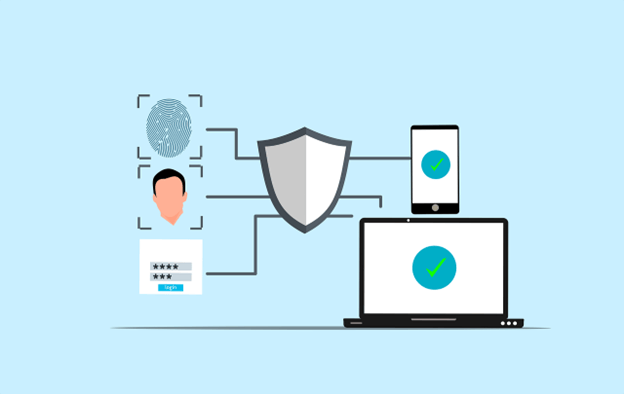
Checklist Before You Implement a Passwordless Authentication Solution
-
European Digital Identity Wallet (EUDIW): From Pilots to Real-World Impact
-

Phishing Resistant MFA Through FIDO Standards? Here’s All You Need to Know
-

Biometric Authentication Challenges in Fintech and Banking
-

Achieve Next Gen Duo Multi Factor Authentication with FIDO Standards


