
The Worldline Approach to MFA Authentication Between Security and UX
05 / 03 / 2026
MFA authentication has evolved from a compliance checkbox to a strategic differentiator for banks and fintechs. In an era of sophisticated phishing, credential theft, and evolving regulatory expectations, customers expect security without sacrificing ease of use. The Worldline FIDO Server provides a standards-based, device-bound foundation that delivers strong protection while dramatically reducing friction for end users. By weaving together robust security controls with a smooth customer experience, Worldline’s approach helps financial institutions meet PSD2/SCA requirements, align with the FIDO Alliance standards, and harmonize with the broader Worldline authentication and fraud portfolio.

What MFA means for finance today: security plus customer experience
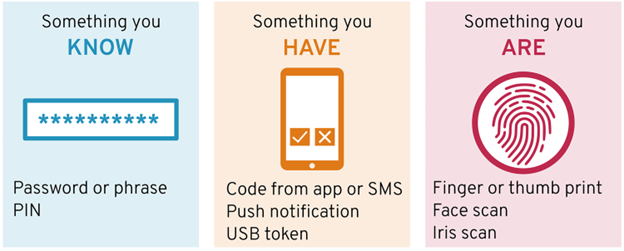
Multi-factor authentication combines at least two independent verification methods—something the user has, something the user is, and/or something the user knows. In fintech, the emphasis is on phishing resistance, resilience against credential theft, and a friction profile that doesn’t degrade the customer journey. The right MFA strategy substitutes static secrets with device-bound, user-verified credentials that stay anchored to the user’s device and governed by risk-based policies.
When done well, MFA:
- Reduces phishing and credential theft by leveraging passkeys and device attestations.
- Improves user experience with biometric or key-based sign-ins that feel effortless.
- Maintains cross-channel consistency, enabling secure sign-in and approvals across web, mobile, and partner interfaces.
- Supports auditable governance with clear decision trails for regulators and internal risk teams.
Worldline FIDO Server as a standards-based MFA backbone
Worldline FIDO Server is designed to be the core, scalable MFA engine you can trust. Built on open standards (FIDO2/WebAuthn, SPC), it enables passwordless paths that still satisfy MFA principles by anchoring authentication to trusted devices and verified user attributes. Key capabilities include:
- Open standards foundation: Interoperable, phishing-resistant MFA across devices and platforms.
- Flexible deployment: On‑premises or cloud, easily integrated with Worldline’s authentication and fraud portfolio, and scalable to enterprise needs.
- Device-bound assurance: Passkeys and device attestations bind authentication to a specific, trusted device, reducing the risk of credential compromise.
- Risk-aware orchestration: Policy-driven decisions tailor the MFA experience based on device health, location, user behavior, and transaction context.
- Auditable governance: End-to-end traceability of authentication events supports PSD2/SCA compliance and regulatory reviews.
PSD2/SCA and adaptive MFA: context-aware security that respects UX
PSD2 and SCA emphasize risk-based authentication that strengthens security where needed without unduly burdening legitimate customers. An MFA stack centered on Worldline FIDO Server can adapt to context:
- Inline risk decisioning: At login or during a transaction, the system decides whether to require a passkey touch, biometric verification, or additional evidence.
- Audit-friendly controls: Every decision is captured with rationale, aiding regulatory reviews and internal audits.
- Privacy-by-design: Credentials stay bound to the device, with governance controls that determine data flow and storage.
From a practical standpoint, this means MFA deployments that satisfy PSD2/SCA are dynamic workflows rather than rigid checklists. They preserve customer trust and drive conversions while maintaining strong protection.
Use cases illustrating MFA in finance with a focus on UX
Use Case 1: Secure login to online banking and mobile apps
A modern MFA login combines a device-bound passkey with a biometric verification step. When a user signs in, Worldline FIDO Server evaluates device health signals (device ID, OS integrity, geolocation, tamper indicators) and applies risk signals to decide whether to authorize with a passkey or prompt for additional verification. The result is a frictionless sign-in with phishing-resistant protection and PSD2/SCA-aligned governance across web and mobile apps.
Use Case 2: MFA for transaction authorization
For payments and transfers, MFA should confirm identity and intent without forcing unpredictable prompts. A device-bound credential (passkey) can authorize a transaction after risk assessment confirms an acceptable profile. End-to-end encryption, device attestation, and a secure channel protect the transaction data. Because the framework is built on WebAuthn/WebAuthn2 and SPC, it works across devices and ecosystems, delivering a consistent, auditable workflow aligned with PSD2/SCA requirements.
Use Case 3: High-risk operations and privileged access
Critical operations and administrator access require elevated MFA postures. A passwordless, device-bound approach can enforce stronger combinations of biometrics and device attestations for privileged actions. Worldline FIDO Server can integrate with the broader security stack to enforce strict session controls and real-time risk scoring, ensuring access to sensitive resources only under tightly governed conditions.
Use Case 4: XS2A and third-party access
When banks grant access to third-party providers (XS2A), MFA becomes a shared responsibility across ecosystems. A standardized MFA framework backed by Worldline FIDO Server ensures consistent authentication behavior across partner portals, mobile apps, and web interfaces. Open standards support interoperability with partner devices and services, while governance and auditable decisioning help satisfy regulatory expectations for multi-party access.
Synergies with FRAMS, ACS, and DSS in a unified MFA strategy
- FRAMS (Fraud Management System) enriches MFA with real-time risk signals and advanced scoring, enabling precise gating decisions and faster investigations when anomalies are detected.
- ACS (Access Control Server) enforces session-level controls and policy-driven prompts based on risk signals and channel context.
- DSS (Digital Security Suite) protects the broader security envelope, ensuring secure channels, policy enforcement, and governance across authentication events.
Partnerships and standards: the value of the FIDO Alliance Worldline’s ongoing partnership with the FIDO Alliance reinforces our commitment to open, interoperable standards. By leveraging FIDO2/WebAuthn and SPC, Worldline FIDO Server remains compatible with a wide range of authenticators and devices, reducing integration friction and accelerating regulatory readiness. This alliance supports a future-proof MFA approach that minimizes vendor lock-in and underpins multi-channel journeys across banking, fintech, and partner ecosystems.
The Worldline governance framework: governance, risk management, and ongoing improvement
Worldline FIDO Server can function as the core passwordless MFA backbone within the Worldline ITA ecosystem, integrating with FRAMS, ACS, and DSS to deliver risk-aware authentication, centralized policy enforcement, and auditable reporting. This structure supports PSD2/SCA compliance, enterprise risk management, and incident response, while maintaining a focus on user experience and privacy-by-design principles.
Closing reflections: balancing security and UX through MFA authentication MFA authentication isn’t just about stopping fraud; it’s about preserving a smooth, trustworthy customer journey. By grounding MFA in open standards, device-based trust, and adaptive risk-based decisioning, financial institutions can reduce friction for legitimate users while maintaining strong protection. Worldline FIDO Server offers a proven, adaptable foundation for passwordless MFA that aligns with PSD2/SCA, supports the FIDO Alliance standard, and integrates with FRAMS, ACS, and DSS to deliver end-to-end governance and security across channels.
If you’d like to explore how MFA authentication with Worldline FIDO Server can sharpen your security posture without compromising UX, we can map your current authentication flows and pilot passwordless MFA across login and transaction-authorization use cases. A tailored demonstration and governance reporting review can be arranged to fit your schedule.

Miriam Cihodariu
Related articles
-

Scams in Germany 2026: A €12 billion wake-up call for banks
-
Simplifying European digital identity wallet adoption for banks
-

Fraud at the speed of payments: Can your organisation keep up?
-
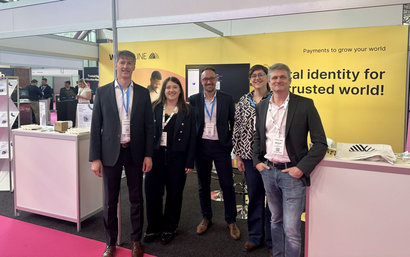
Key Takeaways from Identity Week 2026
-

Fraud Scan Day: Worldline’s yearly view on the evolving fraud landscape
-
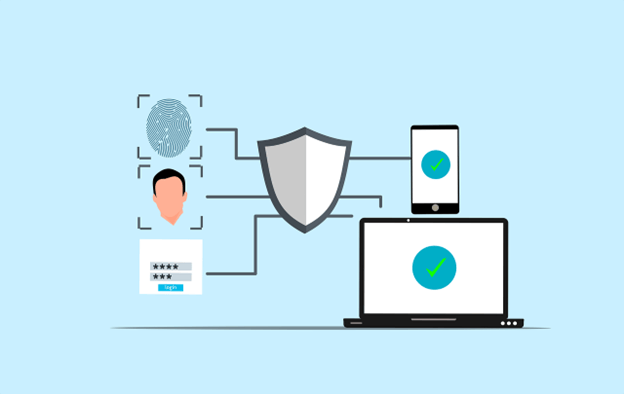
Checklist Before You Implement a Passwordless Authentication Solution
-
European Digital Identity Wallet (EUDIW): From Pilots to Real-World Impact
-

Phishing Resistant MFA Through FIDO Standards? Here’s All You Need to Know
-

Biometric Authentication Challenges in Fintech and Banking
-

Achieve Next Gen Duo Multi Factor Authentication with FIDO Standards


